Wednesday, October 20, 2010

Roles of Men and Women in the 20th Century

Matt
Kevin A.
Lexi
Lacey
Kayla
Danielle
Shelby
Andrew


The Military

Auxiliary Units
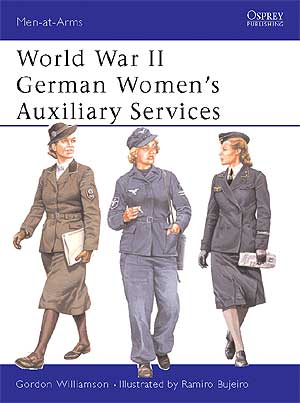
Served in the auxiliary units in the navy (Kriegshelferinnen), air force (Luftnachrichtenhelferinnen) and army (Nachrichtenhelferin)
Hundreds of women auxiliaries served for the SS in the concentration camp

Mata Hari 
Dutch exotic dancer and prostitute
Accused of being a double agent for France and Germany during WWI
Was offered cash from a German consul for information the next time she visited France.  Hari passed on old, outdated information to the German officer.  Arrested in France and executed the same year by firing squad.

World War II
Germany’s men that weren’t in war were afraid to intervene when Russians were raping German women for the fear of being shot. 
The women of Berlin braved the artillery fire to forage for food and water in the streets. It was they who fed the family, cleaned what mess they could, looked after the sick, hid their young girls and took the brunt of Russian brutality. Some women in Berlin were now looking down on their men as the weaker sex and felt disappointed in them and even sorry for them.
Women
·         “For centuries, a woman's role in German society was summed up and circumscribed by the three "K" words: Kinder (children), Kirche (church), and Küche (kitchen)” (4)
·         During the first world war women helped by entering into industrial style jobs while the men were off fighting in the war (1)
o   Approximately 700,000 had begun working by the end of the war
o   After WWI women won the right to vote (1919)
o   Some women kept their jobs after the male soldiers returned
·         During the Third Reich, women were meant to bear “Aryan” children and were taught to do so through aggressive propaganda. During WWII, Adolf Hitler wanted women to focus on the three Ks mentioned earlier and to not take place in war. (3)
·         In 1975, German women were sought out to join the military (2)
Men
·         All men age 18-23 have to attend a nine month training before going into war (2)
·         There are approximately 200,000 soldiers that are considered professional and 300,000 that are more civilian, but are on reserve and are able to become active at any given time
·         Many men were forced into war often through guilt and shame of their family and friends during the first two world wars
·         All major German military and political leaders in the 20th century were men
  
Politics


1919 - women recieved the right to vote

Nazi Germany - Hitler wanted women to just have children to grow Germany's population. It was thier duty to ensure the future of the German race. Women were even given medals for having large families


1949 - Basic law declared men and women equal

1977 - Women gained rights to equal marriage

1980 - National office for women affairs set up in west germany to help work towards women quality

1988 - East germany, women made up almost 1/3 of Socialist unity party of germany (SED) while in west germany, women only made up abour 4.5% of the political party members.

1990 - Sabine Bergmann-Pohl was the president of the people's chamber of the GDR from april to october before the GDR ended


Domestic Life
Roles
In 1919 women received the right to vote
During World War II women took on some of the traditional jobs that the men left behind when they were fighting.
When the World War II was over women tended the wounded, buried the dead, salvaged belongings, and began rebuilding war-torn Germany by clearing away the rubble
In 1977 women got equal rights in marriage.
In West Germany                                                                              
In the early 1980s women qualified for admission to universities in the same numbers as men.
The Basic Law of 1949 declared that men and women were equal.
But it was not until 1957 that the civil code was amended.
·         After World War II women became homemakers and mothers again and largely withdrew from employment outside the home.
In East Germany
·         Mid 1960s women accounted for half of all secondary school graduates.
·         By 1975-76 they were the majority (53%)
·         In the east, however, women remained in the workforce.
·         As early as 1950, marriage and family laws also had been rewritten to accommodate working mothers.
·         Abortion was legalized and funded by the state in the first trimester of pregnancy.
·          An extensive system of social supports, such as a highly developed day-care network for children, was also put in place to permit women to be both mothers and workers.
·         East Germany had to rely on women because of its declining population; the situation was made more critical by the fact that most of those fleeing to West Germany were men.
·         90% of the women worked outside of the home.

Business


Business in the German world is primarily made up of men. Women are not seen much in the business world. According to Wikipedia.com “Women are noticeably absent in the top tiers of German businesses. They only hold 9.2% of jobs in Germany's upper and middle management positions.” Although the Chancellor is a Woman it is still very difficult for woman to rise to management. There have been some issues in creating a law in Germany that would look at the quotas in companies so that woman have a chance to succeed. “ In 2001, the Justice Ministry established a governmental commission to develop a Corporate Governance Codex,.” quoted by Spiegel online. This is a document that was recently amended that could call on companies to increase the number of female managers. “Some companies in Germany such as Deutsche Telekom back in March and energy giant E., have recognized that incorporating more woman into their hierarchies is beneficial to their organization as a whole. Deutsche Telekom was the first DAX company to pledge to raise the percentage of women at mid to high level management to 30 percent.” Spiegel online. This does show us that there are some people who feel that woman can benefit their company, they are climbing the corporate ladder and there are ways that is making this happen either with the government help or by recognizing the good that both genders can play in a company. Stated by German information centre, “The business newspaper Handelsblatt was searching for tomorrow’s top women for Germany, the Financial Times Deutschland then proclaimed the “Age of Women”, and the magazine Capital even carried a cover story entitled “Der Chef trägt Prada” (The boss wears Prada)…. Nicola Leibinger-Kammüller has been managing the machine tool company Trumpf for a number of years now. Simone Bagel-Trah, a representative of the Henkel family, has been chair of the supervisory board of the Düsseldorf washing power and consumer goods company since last year and thus one of Germany’s most powerful women.” This just goes to show that woman can and are ready to make it to the top in the business world.

Simone Bagel-Trah


Education


During the early part of the twentieth century predominantly men went to school with intentions of going to university. By the mid-1960s women accounted for nearly half of all secondary school graduates with intentions on studying at institutes of higher learning in the GDR. Just fifteen years later they made up the majority with fifty-three percent. Supplementary payments and child care were provided to assist women in completing their studies. Women in west Germany did not qualify for admission into universities until the early 1980's. Therefore, west German women had more traditional familial relations, and did not have great ambitions for admission into particular academic departments, and for professional employment after graduation.

Sources


Pictures

Tuesday, October 19, 2010

Men and Women's Role in the 20th Century in the Military

Women:
  •  Served in the auxiliary units in the navy (Kriegshelferinnen), air force (Luftnachrichtenhelferinnen) and army (Nachrichtenhelferin)
  •  Hundreds of women auxiliaries served for the SS in the concentration camps
  •  Also under ‘order’ to produce more pure Aryan children for future wars


Mata Hari:

  •              Dutch exotic dancer and prostitute
  •       Accused of being a double agent for France and Germany during WWI
  •       Was offered cash from a German consul for information the next time she visited France.  Hari passed on old, outdated information to the German officer.  Arrested in France and executed the same year by firing squad.


Women not in war in Germany:
  • Germany’s men that weren’t in war were afraid to intervene when Russians were raping German women for the fear of being shot. 
  • The women of Berlin braved the artillery fire to forage for food and water in the streets. It was they who fed the family, cleaned what mess they could, looked after the sick, hid their young girls and took the brunt of Russian brutality. Some women in Berlin were now looking down on their men as the weaker sex and felt disappointed in them and even sorry for them.


Sunday, October 17, 2010

The best three class blogs in German 110 Fall 2010

1) Kyle W.  95%  Professional and easy to read.
2) David G. 94%  Lots of pictures, keeps interest.  Well written.
3) Kevin A.   90%  Well written and professional.

Tuesday, October 5, 2010

Class Discussion

In class yesterday we talked about the events that made All Quiet on the Western Front such a famous book.  Below are some points we discussed:

  • The book is a tribute to the lost generation of people that were in the first World War.  
  • We talked about Himmelstoss and how his outside life without authority affected how we was during the war, power crazy.
  • Germans either fight authority or suck up to authority
  • How the war was the identity of the men who were in the war.  When they went to war they didn't have an identity so the war became it.  And after the war they no longer had an identity.
  • How the book was advertised well and how it became such a popular book after the raw emotions and feelings of the war settled and past 10 years later. 
  • Erich Maria Remarque became filthy rich with the book.
  • Anti-War book
  • The characters in the book represented the whole generation

Tuesday, September 28, 2010

Lower Saxony/ Niedersachsen

Lower Saxony


Where is Lower Saxony located?
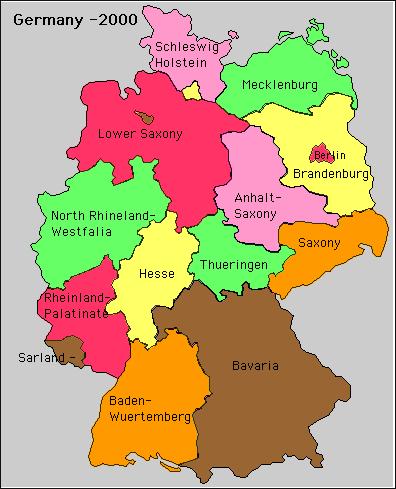
Located in the northwestern part of Germany
Lower Saxony borders many other German states:

  • Southeast: Thuringia
  • East: Brandenburg and Saxony-Anhalt
  • North: Hamburg and Schleswig-Holstein
  • South: Hesse
  • Southwest: North Rhine- Westphalia
  • Northeast: Mecklenburg-Vorpommern
Also bordered by the Netherlands and the North Sea

How many live here?

  • 7,977,000 people
  • 4th largest state in population
How does its size relate to Minnesota, or any other US state?

  • In population:
    • Lower Saxony is equivalent to the population of Minnesota and Iowa together 
  • It is about half the size of Indiana
What is special about Lower Saxony?

  • Second largest state in size
  • 20% of the state is designated to nature conservation
  • Agriculture and farming make up a big part of the economy
  • Automobile manufacturing and automobile parts manufacturing are also important economic part of Lower Saxony
    • Volkwagon has 5 production plants here along with its headquarters, which is located in Wolfsburg
  • The capital of Lower Saxony is Hannover.
    • Hannover is also the largest city in Lower Saxony
  • Mining has been an important source of income in Lower Saxony for centuries. Lower Saxony is also an important supplier of crude oil in the European Union. Mineral products still mined today include iron and lignite.
  • The coat of arms shows a white horse (Niedersachsenross) on red ground, which is an old symbol of the Saxon people
What was the Lower Saxony historically? A kingdom, a duchy, a free city?

  • Was originally a duchy
  • It is named after the Saxons
  • Originally the region was simply called "Saxony", but as the center of gravity of the Duchy of Saxony gradually moved up the Elbe, towards the present-day states of Saxony-Anhalt andSaxony, the region was given the name of Lower Saxony
  • The state was founded in 1946 by the British military administration, who merged the former states of Brunswick,  Oldenburg, and Schaumburg-Lippe with the former Prussian province of Hanover


http://www.gtp.gr/LocPage.asp?id=14414

http://www.germanfoodguide.com/niedersachsen.htm

http://en.academic.ru/dic.nsf/enwiki/11155

Sunday, September 26, 2010

Competition Thingy-Group 2


Life in Germany
1.       When and where did German scientists recently discover a new species of ape?Answer: In Asia on Tuesday, September 21, 2010
Source: http://www.watoday.com.au/breaking-news-world/german-scientists-discover-rare-ape-species-in-asia-20100921-15lkn.html

2.       What city is known as the salt capital of Germany? When did the salt production end?
Answer: Lüneburg, a German city in the state of Lower Saxony, is known as the salt capital of Germany.  It was not until 1980 that the production of salt in the Lüneburg Saline finally closed.
Source: http://worthgem.blogspot.com/2010/09/german-salt-museum-at-luneburg.html

3.       What type of schooling is forbidden?
Answer: Homeschooling
Source: www.german-way.com/educ.html

German History
1.       What was the difference in population in Germany from 1939 to 1946?
Answer: 4 million less people from 1939 to 1946

2.       In the early and middle eleventh century the Saxon kings were able to defeat which Germanic tribes thus strengthening the Elbe Saale frontier?
Answer: The Magyars and the Slavs

3.       What Germanic tribe held onto their tradition of worshiping heathen gods the longest?Answer: The Saxons

German Media
1.       What date did the "television contract" (Fernsehvertrag) get signed?
Answer: March 27, 1953
Source: pg 91 of "The Mass Media of the German Speaking Country" by John Sandford

2.       The Deutsche Welle first began broadcasting is what year?
Answer: 1953
Source: pg 39 of "The Mass Media of the German Speaking Country" by John Sandford

3.       What German newsmagazine is on the rise while its predecessor is on the decline?
Answer: The Focus is on the rise while Der Spiegel is on the decline.
Source: http://www.germanculture.com.ua/library/facts/bl_newspapers.htm

German States: Bavaria
1.       Who are the three primary Germanic tribes to inhabit Bavaria in history?
Answer: Bavarians, Franks, and Nordgau

2.       Pope Benedict was born in town of Marktl Bavaria. Where did he live his adolescence?
Answer: Traunstein
Source:http://www.vatican.va/holy_father/benedict_xvi/biography/documents/hf_ben-xvi_bio_20050419_short-biography_en.html

3.       The Hofbrauhaus is a famous beer hall in Munich Bavaria. What family still owns and operates this historic site?
Answer: The Gerdas
Source: http://www.aviewoncities.com/munich/hofbrauhaus.html

German States: Schleswig-Holstein
1.       Where was the chief base for the Third Reich's navy operations?
Answer: Kiel
Source: pg 259-260 of “Discover Germany” by Jack Altman

2.       Schleswig-Holstein was part of Denmark until what year?
Answer: 1866
Source: pg 259-260 of “Discover Germany” by Jack Altman

3.       What is the world famous annual rock fest that takes place in Schleswig-Holstein?
Answer: Wacken Open Air
Source: http://en.wikipedia.org/wiki/North_Rhine-Westphalia

German States: Westphalia
1.       The Landtag of North Rhine-Westphalia convenes to which city in Westphalia?
Answer: Dusseldorf
Source: http://en.wikipedia.org/wiki/Schleswig-Holstein

2.       Where can the best soil in North Rhine-Westphalia be found?  (specific place)
Answer: The fertile, deep loessial soil of the Köln Bay.
Source: pg 12 of “North Rhine-Westphalia” by J. A. Hellen

3.       What are the names of the two broad trails, one a road the other a trading route in North Rhine-Westphalia that can be traced back to prehistoric times? Answer: Rhine (Road) and Hellway (Trade Route)
Source: pg 18 of “North Rhine-Westphalia” by J. A. Hellen

Berlin
1.       What animal infestation did the U.S. Army eradicate in Berlin?
Answer: Rats
Source:  “The Berlin Wall: How it Rose and Why it Fell” by Doris M. Epler

2.       What is this and what does it stand for? (Picture Link:http://www.planetware.com/i/photo/berlin-d1434.jpg)
Answer: The Soviet War Memorial; it was built in memory of all the Soviet soldiers who died in the battle of the conquest of Berlin. (WWII)
Source: “The Berlin Wall: How it Rose and Why it Fell” by Doris M. Epler

3.       What was the full birth name of the mayor of West Berlin who was in office during JFK’s “Ich bin ein Berliner Speech?”
Answer: Herbert Ernst Karl Frahm

Final Category – Poetry & Cars
1.       “At Bacharach on the Rhine, Lorelei is lingering” is the English translation of the first line of whose poem?
Answer: Hans Rudolf Hilty – poem’s title Lorelei
Source: pg 131 of Contemporary Germany Poetry: An Anthology

2.       “I greet Berlin as three times
 I band my head, three times
against one of the walls” is the English translation of whose stanza?
Answer: Günter Grass – poem’s title Brandmauern
Source: pg 147 of Contemporary Germany Poetry: An Anthology

3.      How does the BMW logo represent the company’s history?
Answer: Originally, the Bayerische Motoren Werke (BMW or “Bavarian Motor Works”) was a German airplane engine manufacturer, which later came to focus on making sweet cars.  The BMW Logo is supposed to represent a white airplane-propeller against the blue sky; a reflection of the company’s beginnings in the early days of flight.